
INDUSTRIES / MUNICIPAL SEWAGE
Municipal sewage treatment plants
that close the gap between drains and rivers.
India's towns generate far more sewage than they treat. We help urban local bodies close that gap with city STPs, decentralised and nature-based plants for colonies and drains, faecal sludge treatment for septic-tank towns, safe sewer cleaning, and NABL-accredited testing that proves the result.
In short
What municipal sewage treatment involves.
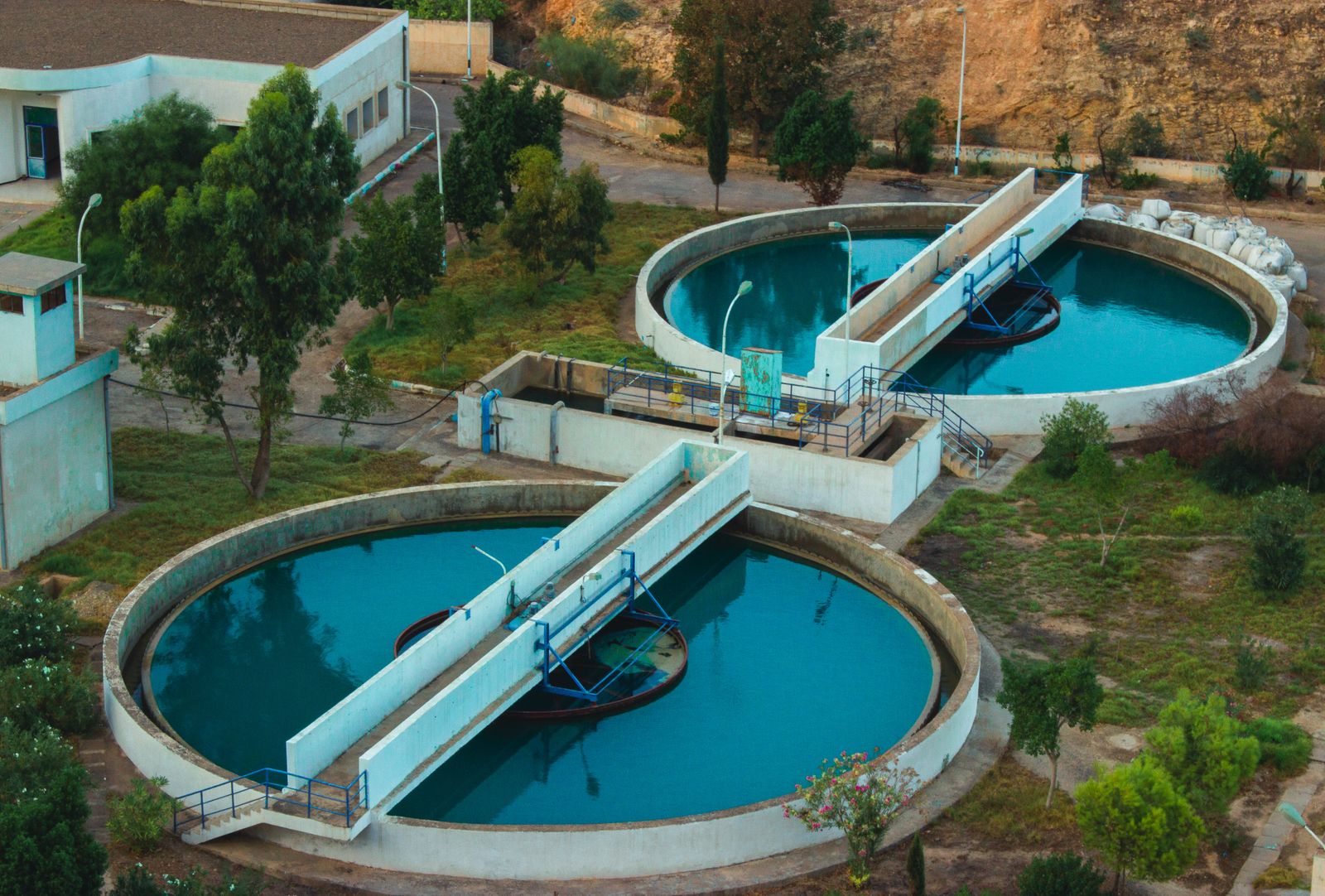
A municipal sewage treatment plant (STP) treats the combined domestic wastewater of a town, collected through sewers or intercepted from open drains, so it can be discharged to a river or reused safely. City plants use activated sludge, SBR, MBBR or UASB with polishing, sized in MLD (million litres per day). Towns that depend on septic tanks also need a faecal sludge treatment plant (FSTP). Decentralised and nature-based plants serve colonies and drains the trunk sewer will not reach for years. Under India's rules, outlets must meet the MoEF&CC STP standards of 2017 or the stricter values recommended by the NGT, and programmes such as Namami Gange, AMRUT 2.0 and Swachh Bharat Mission-Urban 2.0 fund the work.
- 72,368MLD
- Urban sewage generated in India, CPCB national inventory of STPs, 2021
- ~44%
- Share of that sewage covered by installed STP capacity in the same inventory
- 135L/person/day
- CPHEEO water supply norm for cities with sewerage, the basis for STP sizing
- 10mg/L
- BOD in treated sewage recommended by the NGT in 2019
Sewage and the treatment gap
How much sewage do Indian cities produce, and how much is treated?
The CPCB's national inventory of sewage treatment plants (2021) estimated urban sewage generation at 72,368 MLD, against installed treatment capacity of about 31,841 MLD, roughly 44%. Not all of that capacity was operating, and plants that operate are often under-loaded because the sewers that should feed them are incomplete. The rest of the sewage reaches rivers, lakes and ponds through open drains, or soaks into the ground from septic tanks.
Where a town's wastewater comes from
- Sewered areas: toilets, kitchens and bathrooms connected to a sewer network that leads to an STP.
- Unsewered areas with septic tanks: the liquid overflows into drains; the settled sludge (septage) must be emptied and treated separately.
- Open drains (nallahs): carry a mix of greywater, septic tank overflow, rainwater and often small-industry waste. Interception and diversion of these drains is the fastest way to stop sewage reaching a river.
- Infiltration and stormwater: groundwater and rain that enter leaking or combined sewers and dilute sewage in the monsoon.
How cities size an STP
The CPHEEO Manual on Sewerage and Sewage Treatment Systems is the design reference. Water supply of 135 litres per person per day is the usual norm for cities with sewerage, and about 80% of supply is taken as sewage. A town of 1 lakh people at that norm generates roughly 10 to 11 MLD, before allowing for infiltration, future growth (plants are normally sized for a 15 to 30 year horizon) and peak flows.
| Parameter | Municipal sewage | Septage (septic tank sludge) | Why it matters |
|---|---|---|---|
| BOD | 100 to 300 mg/L (lower in diluted or monsoon flow) | Thousands of mg/L | Sets the size of the biological stage; septage cannot go straight into a small STP |
| COD | 250 to 600 mg/L | Many thousands of mg/L | Total organic load |
| Total suspended solids | 150 to 400 mg/L | Very high, partly digested solids | Grit and silt from drains wear pumps and fill tanks |
| Ammonia and total nitrogen | 20 to 50 mg/L as N | High | Drives algal growth in rivers and lakes; NGT values ask for total nitrogen 10 mg/L |
| Total phosphorus | 3 to 10 mg/L | High | Main cause of weed and algae in ponds; NGT value 1 mg/L |
| Faecal coliform | Millions per 100 mL | Very high | Health risk downstream, in bathing ghats and irrigation |
Standards and missions
What standards must a municipal STP meet?
The MoEF&CC notification of October 2017 set national STP discharge standards under the Environment (Protection) Rules, 1986. In 2019 the National Green Tribunal accepted stricter values recommended by an expert committee, and many State Pollution Control Boards and river programmes now apply them to new plants, particularly in river basins.
| Parameter | 2017 notification: most areas | 2017 notification: metro cities and most state capitals | NGT-recommended values (2019) |
|---|---|---|---|
| pH | 6.5 to 9.0 | 6.5 to 9.0 | 5.5 to 9.0 |
| BOD | 30 | 20 | 10 |
| Total suspended solids | Below 100 | Below 50 | 20 |
| COD | Not specified | Not specified | 50 |
| Total nitrogen | Not specified | Not specified | 10 |
| Total phosphorus | Not specified | Not specified | 1.0 |
| Faecal coliform (MPN/100 mL) | Below 1,000 | Below 1,000 | Below 230 (desirable below 100) |
Technologies
Which STP technology suits a city or town?
A municipal STP follows the same chain as any STP (screening, grit removal, biological treatment, settling, disinfection, sludge handling), but at a scale where land, power and the skills of the operating staff decide the choice.
| Technology | How it works | Best for | Meets NGT values? | Watch-outs |
|---|---|---|---|---|
| Conventional activated sludge (ASP) | Aeration tank and clarifiers with sludge return; often with anaerobic digestion of sludge | Large cities with land, 50 MLD and above | With nutrient removal zones and tertiary filtration | Large footprint; sludge bulking |
| SBR (sequencing batch reactor) | Fill, aerate, settle and decant in timed cycles in the same basin | Medium and large towns; nitrogen and phosphorus removal | Yes, with filtration and disinfection | Automation, decanters and instruments must be maintained |
| MBBR | Bacteria grow on plastic carriers in aerated tanks | Upgrading old plants within existing tanks, compact sites | With anoxic zone and tertiary stage | Carrier retention screens; still needs settling |
| UASB with polishing | Anaerobic upflow sludge blanket, then aeration or ponds | Older plants in the Ganga basin; low power | Not without a proper aerobic stage and filtration | Odour and H₂S; polishing ponds alone fall short of current values |
| MBR | Membranes replace the clarifier and filter | Very tight urban sites, high-grade reuse | Yes | Power, membrane cleaning and replacement |
Decentralised and nature-based treatment
Why decentralise
A trunk sewer and a central STP take years and cost most of the budget in pipes. Treating sewage close to where it is generated (a colony, a drain outfall, a market) delivers clean water quickly and allows local reuse in parks and ponds.
BIO-STP
Rispri's BIO-STP is a field-tested, nature-based sewage treatment system. Sewage flows by gravity through engineered beds where plants and the bacteria around their roots treat it, so no blowers are needed and power use is very low. It suits decentralised municipal sewage, townships, campuses and hotels.
Drain interception
Where a nallah carries sewage into a river or pond, it can be intercepted with a diversion weir, screened and treated at the outfall in a compact or nature-based STP, then released or reused. Our pond rejuvenation work combines this with in-pond treatment.
Our NABL-accredited laboratory runs sewage and drain characterisation surveys (BOD, COD, TSS, nitrogen, phosphorus, faecal coliform and heavy metals) and checks existing STP performance against the 2017 and NGT values. Reliable data stops plants being built for sewage that never arrives.
Faecal sludge and septage
How does a faecal sludge treatment plant work?
A faecal sludge treatment plant (FSTP) treats the sludge emptied from septic tanks and pits by suction trucks. Because septage is many times stronger than sewage, it is separated into solids and liquid, and each is treated.
- Receiving station: trucks discharge through a screen; volumes are logged for each truck.
- Solid-liquid separation: sludge drying beds, planted drying beds, a settling-thickening tank or a mechanical screw press.
- Liquid treatment: the separated liquid is treated in an anaerobic stage followed by an aerobic or constructed wetland stage, then disinfected.
- Solids treatment: dried sludge is stabilised and sanitised by co-composting, solar drying or other means until it is safe to handle and use as a soil conditioner.
Where a town already has an STP with spare capacity, septage can instead be co-treated: received at a dedicated point and fed slowly into the STP's sludge or inlet line so it does not overload the plant.
Scheduled desludging
An FSTP only works if trucks bring septage regularly. Towns that move from on-demand emptying to scheduled desludging, typically every few years for each tank, keep the plant loaded and stop septic tanks overflowing into drains.
Reuse
Can treated municipal sewage be reused?
Yes. The National Framework on Safe Reuse of Treated Water, 2022 encourages states to treat sewage as a resource and to set reuse targets and tariffs. Treated municipal sewage is a steady source that grows with the city.
Power plants and industry
Thermal power plants and industrial estates near cities can take treated sewage for cooling and process use after tertiary treatment, freeing fresh water for drinking. Revenue from sale helps pay for O&M.
Parks, roads and construction
Horticulture, road washing, dust suppression and construction curing can all use treated sewage, delivered by pipeline or tanker filling points.
Agriculture
Treated and disinfected sewage can irrigate crops, with restrictions on raw-eaten vegetables. The faecal coliform standard and the disinfection step matter most here.
Lakes and groundwater
Well-treated water can refill urban lakes and ponds and recharge aquifers, subject to stricter nutrient and pathogen limits.
Energy from sludge
Large STPs can digest sludge to biogas for power or Bio-CNG. See waste-to-energy.
Sludge as soil conditioner
Stabilised, dried and tested sludge can be used on land; we test sludge for metals and pathogens in our soil and sludge laboratory.
Cost
How much does a municipal STP cost?
Municipal plant costs vary with technology, outlet standard, land, flood protection and how much of the scope includes sewers, pumping stations and O&M. These indicative figures are for treatment plants only.
| Plant | Typical use | Indicative capital cost* |
|---|---|---|
| Decentralised STP, 100 KLD to 1 MLD | Colony, drain outfall, market, small town ward | ₹30 lakh to ₹2.5 crore |
| Town STP, 5 to 20 MLD (SBR / MBBR) | Small and medium towns | About ₹1.5 to 3 crore per MLD |
| City STP, 50 MLD and above | Large cities, river-basin projects | About ₹1.2 to 2.5 crore per MLD |
| FSTP, 10 to 50 m³/day of septage | Septic-tank towns and town clusters | ₹1 to 5 crore |
*Indicative 2026 ranges for treatment plants including civil, mechanical and electrical works to 2017 standards with disinfection, excluding land, sewers, pumping stations, taxes and long-term O&M. Plants to NGT-recommended values with nutrient removal cost more. Nature-based BIO-STPs cost less to run but need more land. Running cost for a conventional plant is mostly power, staff and sludge disposal. Every figure must be confirmed by a detailed project report.
What drives capital cost
- Outlet standard: 2017 values or NGT values with nutrient removal
- Technology and land available
- Flood level, soil and foundation conditions
- Sludge digestion and dewatering
- Automation, SCADA and online monitoring
How O&M is paid for
- Design-build-operate contracts with 10 to 15 years of O&M
- Hybrid annuity model (HAM): part of the capital paid during construction, the rest as annuities linked to performance
- Sewerage charges and treated water sales
- Payment linked to outlet quality, verified by testing
We audit existing municipal plants, find whether the problem is sewage that never arrives, broken equipment or operation, and propose upgrades within existing tanks, drain interceptions or decentralised plants to use the capacity.
Troubleshooting
Common problems in municipal sewage systems.
- 01The problem
The STP runs at a fraction of its capacity because house connections and sewers are incomplete.
What we doIntercept nearby drains into the plant, plan house-connection drives and adjust operation to the real load.
- 02The problem
An older UASB or pond plant cannot meet current standards.
What we doAdd an aerobic stage (MBBR or SBR), tertiary filtration and disinfection, reusing existing tanks where possible.
- 03The problem
Silt, plastics and debris from open drains choke screens and pumps.
What we doInstall automatic screens and grit removal at the inlet and floating-debris screens on drains, with mechanised cleaning.
- 04The problem
Monsoon flows flood the plant and wash out the biology.
What we doProvide storm bypass with primary treatment, protect the biological stage and reduce infiltration in leaking sewers.
- 05The problem
Septage tankers dump into drains because there is no FSTP.
What we doBuild an FSTP or co-treatment station at an existing STP, with truck logging and scheduled desludging.
- 06The problem
Sewer blockages still need workers to enter manholes.
What we doSupply mechanised no-entry cleaning equipment and toxic gas detectors, and train the crews.
What we offer
Services for urban local bodies.
Municipal and decentralised STPs
SBR, MBBR and BIO-STP plants, upgrades of old plants and drain-outfall treatment.
STP solutions →Pond and lake rejuvenation
Drain interception, in-pond treatment and floating evaporation covers.
Pond rejuvenation →Sewer cleaning and gas detection
No-entry blockage cleaning, floating-debris screens and toxic gas alarms.
Sewer safety →Sewage and drain testing
NABL-accredited surveys and third-party performance checks of STPs.
Testing →Sludge and solid waste
Sludge drying, composting and municipal solid waste solutions.
Waste management →Online monitoring and SCADA
Flow and quality analysers with data to dashboards and the board.
Smart water →Buying guide
What to check in a municipal STP proposal.
Questions for any contractor or consultant, including us.
- Is the design flow based on a drain and sewage survey, or only on population?
- Which outlet standard is guaranteed, and how is it verified by an independent laboratory?
- Will sewage actually reach the plant on day one, through sewers or drain interception?
- What is the power use per MLD, and the sludge production per day?
- How is septage handled in unsewered parts of town?
- Who will operate the plant for the next 10 to 15 years, and how is payment linked to performance?
- Where will the treated water and sludge go? Ask for a reuse plan.
- How are sewer workers kept safe during cleaning and maintenance?
Why Rispri
From the drain survey to the treated water report.
Our own NABL lab
Sewage, drain, sludge and groundwater testing for design and for independent performance checks.
Engineering since 1999
1,498+ plants and turnkey projects and 499+ clients across industries, institutions and cities.
Low-energy and safe technologies
Field-tested BIO-STP, floating evaporation covers and no-entry sewer cleaning. We work in collaboration with IIT Bombay, IIT Kharagpur and ICT Mumbai.
Operate and maintain
Trained operators and monthly reports, from offices in Jaipur, Agra and Ahmedabad.
Questions
Municipal sewage treatment FAQs.
How much sewage does India generate?
The CPCB's national inventory of STPs (2021) estimated urban sewage generation at 72,368 MLD, with installed treatment capacity of about 31,841 MLD, or roughly 44%. Actual treatment was lower because not all plants were operating or fully loaded.
What size STP does a town need?
Multiply the design population by the water supply norm (135 litres per person per day for sewered cities under CPHEEO) and take about 80% as sewage, then add infiltration and growth. A town of 1 lakh people needs roughly 10 to 11 MLD today, more for a 30-year design horizon.
Which technology is best for a municipal STP?
SBR and MBBR are common for new and upgraded plants because they meet strict standards in a compact footprint. Activated sludge suits very large cities with land. UASB plants need an aerobic stage and filtration to meet current values.
What is a BIO-STP?
BIO-STP is Rispri's nature-based sewage treatment. Sewage flows by gravity through planted beds where roots and bacteria treat it, so blowers are not needed and power use is very low. It suits decentralised municipal sewage, townships and campuses with some land.
What is a faecal sludge treatment plant?
An FSTP treats sludge emptied from septic tanks and pits. It separates solids from liquid, treats the liquid biologically and dries and sanitises the solids into a soil conditioner. Towns without full sewerage need one.
Can septage be treated at an existing STP?
Yes, if the STP has spare capacity. Septage is received at a screened station and fed slowly into the plant (co-treatment) so the strong load does not upset the biology.
What are the NGT standards for STPs?
The values recommended by the NGT in 2019 are BOD 10, COD 50, TSS 20, total nitrogen 10 and total phosphorus 1 mg/L, with faecal coliform below 230 MPN/100 mL (desirable below 100). Many boards apply them to new plants.
Which government schemes fund municipal STPs?
The main ones are Namami Gange for towns in the Ganga basin, AMRUT 2.0 for sewerage and septage management in mission cities, and Swachh Bharat Mission-Urban 2.0 for used water and faecal sludge management, alongside state schemes.
Can treated municipal sewage be reused?
Yes, for power plants, industry, parks, construction and agriculture, as encouraged by the National Framework on Safe Reuse of Treated Water, 2022. Each use needs the right level of treatment and disinfection.
How can sewers be cleaned without manual entry?
With mechanised equipment that clears blockages from the surface and gas detectors that warn crews of hydrogen sulphide before work starts. Hazardous manual cleaning is prohibited under the 2013 Act.
What does a municipal STP cost per MLD?
As an indication, roughly ₹1.2 to 3 crore per MLD for the treatment plant including civil works, depending on size, technology and standard, excluding land, sewers and long-term O&M. A detailed project report sets the real figure.
Related