Municipal and village RO plants
Cut reject volume from community RO plants.
- Village RO units
- Town water supply RO
- Rural drinking water schemes
RESEARCH PARTNERSHIP / 02

Rispri Labs delivers forward osmosis systems, developed with ICT Mumbai, that recover clean water from RO reject at under 2 bar and return the concentrate as fertiliser solution or industrial brine. Less waste, more water, no high-pressure pumps.
ICT Mumbai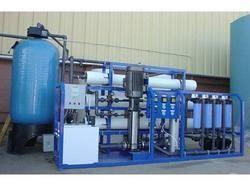
What it means for you
litres of RO reject turned back into clean water in pilot runs.
about the pressure in a car tyre, instead of 55–80 bar for high-pressure RO.
With a potash draw, what's left goes to farms as nutrient solution.
Performance
Every RO plant produces a salty reject stream that is expensive to dispose of and increasingly restricted. Forward osmosis pulls clean water out of it at very low pressure and turns what is left into something useful.
Figures are from the research team's pilot-scale trials. Performance on your stream is confirmed in our laboratory before design.
Challenge and response
RO reject disposal is costly and tightly regulated.
Recover most of the water and cut the volume that needs disposal.
Second-stage RO on reject needs very high pressure and scales fast.
Forward osmosis runs at 0.1 to 2 bar, with no high-pressure pumps.
Conventional forward osmosis wastes energy regenerating its draw.
The diluted draw is resaturated and reused, or sold, so no thermal regeneration is needed.
Concentrate has no value and goes to evaporation ponds.
It becomes fertigation solution, industrial brine or syrup.
How it works
A saturated draw of salt, potash, urea or sugar creates a strong osmotic pull.
Pure water crosses the membrane from the reject into the draw at 10 to 50 °C.
The diluted draw is topped up with fresh salt and sent back round.
Surplus draw leaves as brine, fertigation solution or syrup for a buyer.
Use cases
Cut reject volume from community RO plants.
Recover water and shrink the load on evaporators.
Use a potash or urea draw and send the diluted draw to farms.
Draw fresh water from seawater with no high-pressure stage.
Sell concentrated salt draw as industrial brine.
Recover water from on-site RO and cut tanker supply.
Comparison
| Factor | Second-stage RO / evaporation | Rispri solution |
|---|---|---|
| Operating pressure | 55–80 bar for high-salinity RO | 0.1–2 bar |
| Energy | High-pressure pumps or steam | Low-pressure circulation |
| Draw recovery | Thermal regeneration in conventional FO | Resaturation or direct sale; no regeneration step |
| By-product | Waste brine for disposal | Fertigation solution, brine or syrup |
| Fouling | Foulants compacted at high pressure | Low pressure keeps fouling easier to reverse |
Standards and regulations
We design each system to meet your consent conditions and the regulations for your sector, and our laboratory reports against them.
Industries served
Why Rispri
Built on patented and peer-reviewed research from our partnership with ICT Mumbai.
Our accredited laboratory characterises your water or waste before design and verifies results after.
The team that builds ETPs, STPs and ZLD plants across India takes each solution from pilot to full scale.
Design, supply, installation, commissioning, operation and testing under one contract.
Questions
RO pushes water through a membrane with high pressure. Forward osmosis pulls it through using a concentrated draw solution, so it runs at under 2 bar and avoids the energy and scaling problems of high-pressure RO on salty reject.
The diluted draw is resaturated with fresh salt and reused, or it leaves the plant as a product such as fertigation solution or brine. This avoids the energy-hungry regeneration step that conventional forward osmosis needs.
On a 13.6 m² pilot module, 76.9% of RO reject was dewatered with a salt draw in a single pass, and up to 86.5% in recirculation. Results for your reject are confirmed in our laboratory and on a pilot.
Yes. With potash or urea as the draw, the diluted solution carries nutrients that suit drip fertigation. Potash draws dewatered about 70% of the reject in pilot runs.
The process has run at pilot scale on real RO reject and seawater. We begin with a pilot module on your site to size the full system.
Research partnerships
THE NEXT STEP
Send us a sample or tell us about your site. We will test it, recommend a configuration and set up a pilot.
Request a pilot