Problem 01
Factory wastewater that fails COD, smells or makes too much sludge.
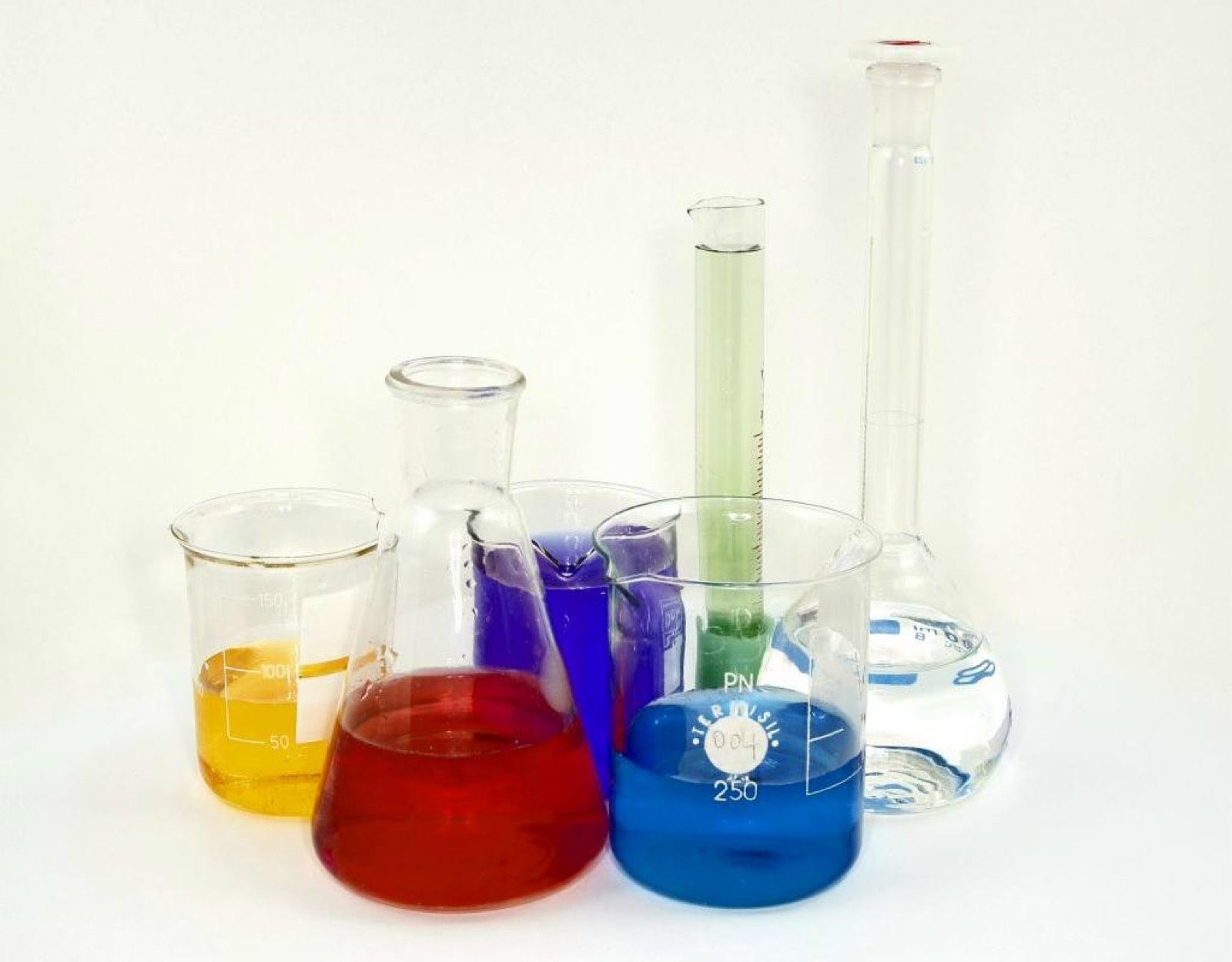
COD tells you how much pollution is in the water. Leather, textile, pharma, pesticide and dye units often have wastewater that a normal ETP cannot clean to the legal limit, or that leaves heaps of sludge and a bad smell. These methods break down the pollution at low running cost. Read the guide →
Ready: level 9 of 9Full-size plants
- The problem
- Your ETP keeps failing the COD test and produces heaps of sludge.
- How it works
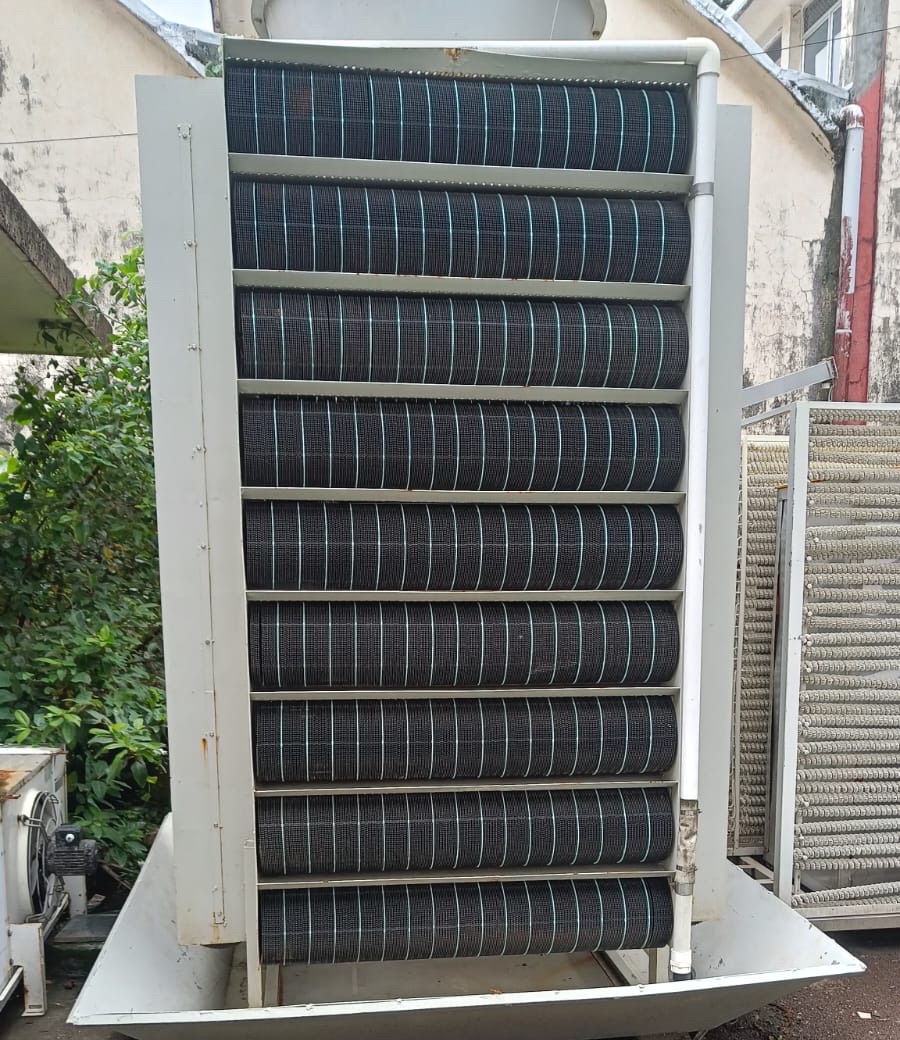
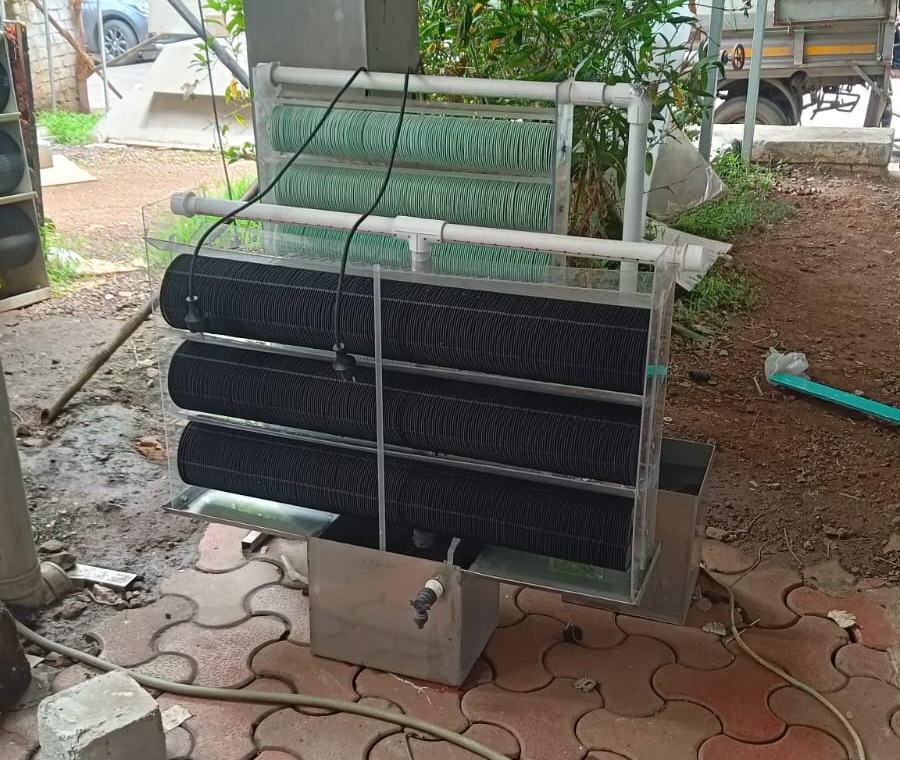
- Bacteria live on activated carbon packed in a tank.
- What it has achieved
- Costs INR 8 to 10 to treat 1,000 litres. Small space, low power, no smell.
See full details →
Ready: level 9 of 9Full-size plants
- The problem
- Sewage or factory wastewater needs cleaning with very little sludge left over.
- How it works
- Air and wastewater keep carbon granules moving in a tank.
- What it has achieved
- About INR 8 per 1,000 litres. Built up to 15 lakh litres a day.
See full details →
Ready: level 9 of 9Full-size plants
- The problem
- Wastewater from pesticide, dye or chemical plants is so strong it kills the bacteria in the ETP.
- How it works
- Hydrogen peroxide is added and passes over carbon coated with iron.
- What it has achieved
- INR 12 to 15 per 1,000 litres.
See full details →
Ready: level 7 of 9Trial plant
- The problem
- Treated wastewater still foams because detergent is left in it.
- How it works
- Natural enzymes fixed on carbon break down the leftover detergent.
- What it has achieved
- Tested in a leather unit.
See full details →
Ready: level 6 to 9 of 9500 to 40,000 litres an hour
- The problem
- Distillery, pharma or chemical wastewater has pollution or ammonia that bacteria cannot break down.
- How it works
- Water spins through a device with no moving parts.
- What it has achieved
- Each unit handles up to 40,000 litres an hour.
See full details →
Ready: level 9 of 9Plant size
- The problem
- Your STP or food factory ETP cannot make water clean enough to reuse.
- How it works
- An extra stage makes strong cleaning agents inside the water that break down pollution, colour and germs.
- What it has achieved
- Proven on sewage and on food, sugar and pharma wastewater.
See full details →
Ready: level 9 of 9Full size
- The problem
- A tannery must stop sending out any wastewater, but its mixed wastewater is too hard to treat.
- How it works
- Each type of wastewater is kept in its own line.
- What it has achieved
- Zero wastewater discharge reached.
See full details →
Ready: level 9 of 9Full size
- The problem
- Fat and oil in the wastewater clog your biogas reactor.
- How it works
- A reactor built to handle fat and solids.
- What it has achieved
- Running at factories as a better choice for this kind of wastewater.
See full details →
Ready: level 6 of 9Trial
- The problem
- Factory wastewater fails both the COD test and the ammonia test.
- How it works
- One biological step removes both the pollution and the ammonia at the same time.
- What it has achieved
- Proven at 25 to 100 litres a day.
See full details →
Ready: level 6 of 9Trial
- The problem
- Adding chemicals at the start of the ETP creates a lot of sludge.
- How it works
- A tank with two zones: one catches the floating solids, the other lets bacteria digest them.
- What it has achieved
- Small space, low power, very little sludge.
See full details →
Ready: level 7 of 9Trial
- The problem
- Coloured wastewater from dyeing or coffee processing stains the river it goes into.
- How it works
- Selected sea bacteria break down textile dyes and make them harmless.
- What it has achieved
- Treated dye water let 38% more light through in tests.
See full details →
Ready: level 7 of 9Trial
- The problem
- Water or soil near firework or rocket fuel units has perchlorate in it.
- How it works
- Selected bacteria, working without air, turn perchlorate into harmless salt and oxygen.
- What it has achieved
- Tested at trial size.
See full details →
Ready: level 6 to 9 of 9Trial to full size
- The problem
- Neighbours complain about the smell from a tannery, ETP or sludge yard.
- How it works
- Smelly air is pulled through a damp bed where bacteria eat the smell.
- What it has achieved
- From small units of 10 to 100 cubic metres an hour up to full factory size.
See full details →
Ready: level 6 to 9 of 9Small site
- The problem
- A small site needs to clean wastewater, rainwater or sewage for reuse on plants.
- How it works
- Water is settled and filtered through treated natural filter material, then UV light and ozone kill the germs.
- What it has achieved
- About 1,000 litres an hour at about 5 paise a litre.
See full details →