Problem 01
Salty water, RO plants and membranes.
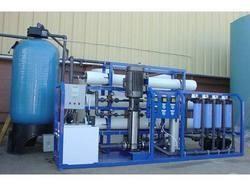
Where groundwater is salty, many villages use RO plants. But a typical RO plant throws away about half the water, and many stop working because nobody looks after them. These methods waste less water and keep plants running. Read the guide →
Ready: level 7 of 9Village, school or bottling unit
- The problem
- The water is salty and may also have fluoride, arsenic or nitrate.
- How it works
- Ready-made units use RO, or NF (a looser membrane that removes less salt and wastes less water).
- What it has achieved
- 100 to 4,000 litres an hour. The NF unit uses 70% of the water, compared with 40 to 50% in a typical RO.
See full details →
Ready: level 9 of 9Village or hospital
- The problem
- The water is salty, but RO removes all the good minerals and wastes too much water.
- How it works
- Instead of pushing water through a membrane, a small electric current pulls the salt out of the water.
- What it has achieved
- 500 to 1,000 litres an hour. Sends water quality readings online.
See full details →
Ready: level 7 to 9 of 9Village
- The problem
- The water is not salty but has germs or mud. An RO plant would only waste water here.
- How it works
- UF (ultrafiltration) membranes have holes so small that germs and mud cannot pass, but salts and minerals can.
- What it has achieved
- Uses over 95% of the water. Removes 99.9999% of bacteria and 99.99% of viruses.
See full details →
Ready: level 6 to 9 of 9Membrane factory
- The problem
- Plants wait weeks for imported RO membranes when one fails.
- How it works
- Know-how to make RO membranes locally for drinking water and factory use.
- What it has achieved
- Already in commercial production.
See full details →
Ready: level 7 of 9Any RO plant
- The problem
- Used RO membranes are thrown away as plastic waste that is hard to get rid of.
- How it works
- A chemical treatment turns old RO membranes into working membranes for easier jobs, so they are reused instead of dumped.
- What it has achieved
- Old membranes become usable again.
See full details →
Ready: level 7 of 9Village RO plant
- The problem
- The village RO plant stops working and nobody finds out until people complain.
- How it works
- A small box checks how salty the water is, how fast it flows, the tank level and the power.
- What it has achieved
- Made for 500 to 1,000 litres an hour plants. Already working in several districts.
See full details →
Ready: level 9 of 9Remote site or lab
- The problem
- A remote or coastal site has no safe groundwater at all.
- How it works
- A machine pulls moisture out of the air, like an AC unit does, then cleans it and adds back minerals.
- What it has achieved
- 700 to 5,000 litres a day. Pure water at 25 to 60 litres an hour.
See full details →
Ready: level 7 of 9Emergencies and events
- The problem
- After a flood or drought, or at a large fair, thousands of people need safe water for a few days.
- How it works
- A vehicle carries its own power and a set of water cleaning units.
- What it has achieved
- Safe water anywhere the van can reach.
See full details →
Ready: level 9 of 9Mine and nearby villages
- The problem
- Coal mines pump out a lot of water while nearby villages are short of drinking water.
- How it works
- The mine water is settled, filtered and disinfected to remove mud, metals and germs.
- What it has achieved
- Low-cost drinking water from water that was being thrown away.
See full details →