
INDUSTRIES / POWER PLANTS
Thermal power plant wastewater treatment
that keeps water inside the plant.
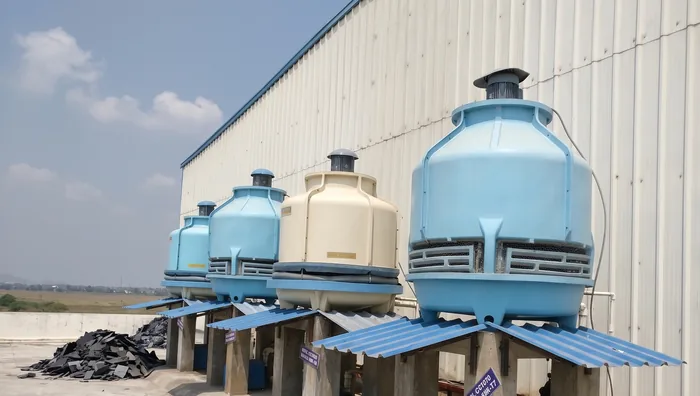
A coal-fired station uses more water than almost any other industry, and most of it goes through the cooling towers. We test every stream in our NABL-accredited laboratory, then design the blowdown recovery, ash water recirculation, FGD wastewater treatment and chemical programme that bring specific water consumption down and wastewater discharge towards zero.
In short
How power plant wastewater is treated and reused.
Thermal power plant wastewater treatment deals with the water left over from cooling towers, boilers, the demineralisation (DM) plant, ash handling, flue gas desulphurisation (FGD), coal handling and the staff township. Each stream is treated separately and reused in a cascade: boiler blowdown goes back to the cooling tower, cooling tower blowdown and neutralised DM waste go to ash handling or to softening and RO, ash pond water is settled and pumped back, and FGD purge is treated for metals and used for ash conditioning or evaporated. Under MoEF&CC's 2015 notification for thermal power plants, as amended, cooling-tower plants must keep specific water consumption within 3.5 m³ per MWh, and units installed from 2017 within 3.0 m³ per MWh with zero wastewater discharge.
- 3.5m³/MWh
- Maximum specific water consumption for existing cooling-tower plants
- 3.0m³/MWh
- Limit for units installed from 1 January 2017, which must also achieve zero wastewater discharge
- 0.5mg/L
- Free available chlorine limit for cooling tower blowdown under the thermal power standards
- 17categories
- Of highly polluting industry that must run online monitoring; thermal power is one of them
Water uses and wastewater
Where does a power plant use water, and what comes out?
In a coal-fired station with closed-cycle cooling, the cooling towers account for most of the water consumed, because water evaporates to carry away the heat rejected in the condenser. Ash handling is the second big user in plants with wet ash disposal. Everything else is small by comparison, but each stream has its own chemistry, so mixing them in one drain is the most common mistake.
| Stream | Where it comes from | What it carries |
|---|---|---|
| Cooling tower blowdown | Water bled from the cooling water circuit so that salts do not build up beyond the safe limit | Dissolved salts concentrated several times, hardness, silica, inhibitors (phosphate, zinc), biocide residue |
| Boiler blowdown | Water drained from the boiler drum to control dissolved solids | Low salt, high pH, phosphate, hot; usually cleaner than raw water |
| DM plant regeneration waste | Acid and caustic used to regenerate ion exchange resins that make boiler feed water | Swings from strongly acidic to strongly alkaline; high TDS |
| Condensate polishing regeneration | Regeneration of the resins that clean returned condensate | Similar to DM waste, smaller volume; ammonia in some plants |
| Ash handling water | Water used to sluice bottom ash and, in wet systems, fly ash to the ash pond | Ash fines, high or fluctuating pH, calcium, sulphate and trace elements leached from ash |
| FGD wastewater (purge) | Bleed from wet limestone FGD absorbers to keep chlorides in check | Very high chlorides and TDS, gypsum fines, metals such as mercury, selenium and arsenic, boron |
| Coal handling and coal pile runoff | Rain on coal stockyards, conveyor wash and dust suppression drainage | Coal fines; can be acidic with iron and sulphate where coal contains pyrite |
| Oily water | Fuel oil handling area, transformer yard, turbine and mill areas | Free and emulsified oil, suspended solids |
| Township and plant sewage | Staff colony, canteens and toilets | Organic matter (BOD), nutrients and bacteria; a good source of reusable water |
Typical characteristics of the main streams
| Stream | Typical quality | Why it matters |
|---|---|---|
| Cooling tower blowdown | TDS roughly 1,500 to 5,000 mg/L, depending on raw water and cycles of concentration; silica and hardness near scaling limits | The largest wastewater flow; scaling and silica decide how much of it RO can recover |
| Boiler blowdown | pH about 9 to 10.5; TDS low, often a few hundred mg/L | Clean enough to go straight back to the cooling tower once cooled |
| DM regeneration waste | pH from below 2 to above 12 during a cycle; TDS several thousand mg/L | Needs a neutralisation pit; cannot go to biology or membranes as it is |
| Ash pond overflow | pH often 7 to 9, higher with some ash; TSS low when the pond works, high when it short-circuits | Suspended ash and calcium carbonate scale in recirculation pipes; trace metals |
| FGD purge | Chlorides commonly held around 10,000 to 20,000 mg/L in the absorber; TDS in the tens of thousands of mg/L; pH about 5 to 6.5 | Corrosive, saturated with gypsum, and the main source of dissolved metals in the plant |
| Coal pile runoff | TSS high after rain; pH can fall below 4 with pyritic coal | Acidic runoff mobilises iron and manganese and stains drains |
| Township sewage | BOD 150 to 300 mg/L; TSS 150 to 400 mg/L | Treated sewage is a reliable source of cooling tower make-up |
Gas-based and combined cycle plants have a much simpler water profile. There is no coal, no ash and no FGD, and because the gas turbine produces part of the power without steam, water use per MWh is far lower. Their main streams are cooling tower blowdown, heat recovery steam generator (HRSG) blowdown, DM regeneration waste and sewage.
Norms and rules
Which standards apply to thermal power plant effluent?
The Environment (Protection) Rules, 1986 contain industry-specific standards for thermal power plants, set stream by stream rather than for one combined outlet. The main values are below. Your consent to operate may add limits or require zero discharge outright.
| Stream | Parameter | Limit |
|---|---|---|
| Condenser cooling water (once-through) | pH; temperature; free available chlorine | 6.5 to 8.5; not more than 5 °C above intake; 0.5 |
| Boiler blowdown | Suspended solids; oil and grease; copper (total); iron (total) | 100; 20; 1.0; 1.0 |
| Cooling tower blowdown | Free available chlorine; zinc; chromium (total); phosphate | 0.5; 1.0; 0.2; 5.0 |
| Ash pond effluent | pH; suspended solids; oil and grease | 6.5 to 8.5; 100; 20 |
Treatment scheme
Power plant wastewater, stream by stream.
A power plant does not need one big ETP. It needs each stream treated just enough for its next use, and a guard pond (central monitoring basin) where everything that remains is checked before any reuse or discharge.
| Stream | Treatment | Where the water goes next |
|---|---|---|
| 1. Cooling water circuit | Side-stream filtration, scale and corrosion inhibitors, biocides and pH control so the tower runs at more cycles of concentration | Less blowdown and less make-up for the same heat load |
| 2. Boiler blowdown | Flash and cool; check silica and phosphate | Cooling tower make-up |
| 3. DM and polishing regeneration | Collect in a lined neutralisation pit; balance acid and caustic, trim with lime or acid | Ash handling, or blended into the blowdown recovery plant |
| 4. Cooling tower blowdown recovery | Lime or chemical softening and clarification to remove hardness and silica, then filtration, UF and RO | RO permeate to cooling tower or DM plant; RO reject to ash handling, FGD make-up or evaporation |
| 5. Ash water recovery | Ash pond or ash slurry settling, decant into a clarifier, pH correction and anti-scalant dosing, return pumping | Back to bottom ash and fly ash sluicing |
| 6. FGD wastewater | Desaturation with lime, coagulation, metals precipitation with organosulphide, clarification and filtration; sludge dewatering | Ash conditioning or wetting; or softening, RO and evaporation where zero discharge is required |
| 7. Coal handling runoff | Coal settling pond, pH correction if acidic, filtration | Dust suppression and conveyor washing |
| 8. Oily water | Oil separator (TPI or API), then DAF or oil-absorbent polishing; skimmed oil and sludge to authorised recyclers | Guard pond, then service water |
| 9. Township sewage | STP (MBBR, SBR or extended aeration) with filtration and disinfection | Horticulture and cooling tower make-up |
Options for the two hardest streams
| Option | Best for | Watch-outs |
|---|---|---|
| Raising cycles of concentration with better chemistry | Cutting blowdown volume at low capital cost | Limited by silica, calcium and phosphate solubility; needs reliable dosing and monitoring |
| Softening plus UF and RO on blowdown | Recovering most of the blowdown as high-quality make-up | Silica and hardness must come out first or the RO scales; reject still needs a home |
| Using blowdown and RO reject for ash handling | Plants with wet bottom ash or high-concentration slurry disposal | Scaling in ash lines; chlorides and metals carried into the ash pond |
| Physico-chemical treatment of FGD purge | Removing suspended gypsum and most heavy metals | Does not remove chlorides or TDS; sludge may be hazardous |
| Thermal or non-thermal evaporation of FGD purge or reject | Full zero liquid discharge | High chloride brine is corrosive; energy cost decides the economics |
Our NABL-accredited laboratory tests make-up, blowdown, ash pond, FGD purge, DM waste and sewage for TDS, hardness, silica, chlorides, sulphate, metals and oil, so the water balance and every treatment step rest on measured values.
Reuse and zero discharge
How a power plant gets to zero wastewater discharge.
Zero wastewater discharge in a power plant is reached by cascading water from clean uses to dirty ones, and only spending money on treatment where a stream has nowhere left to go. The order of work is usually the same.
1. Measure the water balance
Flow meters and a month of test results often show that much of the "loss" is leaks, overflows and uncontrolled blowdown. Dry fly ash collection and high-concentration slurry disposal also need far less water than lean ash slurry.
2. Run the cooling towers harder
Every extra cycle of concentration cuts both make-up and blowdown. Correct cooling water chemicals, side-stream filtration and pH control let a tower run at more cycles without scale, corrosion or biofouling in the condenser.
3. Cascade the streams
Boiler blowdown to the cooling tower; cooling tower blowdown and neutralised DM waste to ash handling; ash pond water back to ash sluicing; coal yard runoff to dust suppression; treated sewage to cooling tower make-up.
4. Recover what is left
Softening, UF and RO turn blowdown into make-up water. The small, salty remainder (RO reject and FGD purge) goes to ash conditioning or to an evaporator. Our non-thermal RCD vaporiser evaporates such brines with air and low-grade heat at about ₹80 to 160 per m³, against an estimated ₹430 to 1,070 per m³ in a steam MEE, and power plants have plenty of low-grade heat to offer. Forward osmosis can recover further water from RO reject at under 2 bar before evaporation.
Cost
What does power plant wastewater treatment cost?
Costs depend on unit size, raw water quality, the ash handling system and whether the plant has wet FGD. These ranges help with budgets for individual packages.
| Package | Typical scope | Indicative cost* |
|---|---|---|
| Township STP, 500 KLD to 1 MLD | MBBR or SBR, filtration and disinfection for reuse | ₹70 lakh to 2.5 crore |
| Oily water treatment, 50 to 100 m³/day | TPI separator, DAF or polishing filter, sludge handling | ₹25 to 70 lakh |
| Cooling tower blowdown recovery, per 1,000 m³/day | Softening clarifier, filters, UF and RO | ₹5 to 12 crore |
| FGD wastewater physico-chemical treatment, 200 to 500 m³/day | Desaturation, metals precipitation, clarifier, filter press | ₹4 to 12 crore |
| Brine evaporation for zero discharge | RO reject or FGD purge to evaporator and dryer | Priced on volume and chemistry after testing |
*Indicative 2026 ranges for equipment, electricals and installation, excluding land, civil works, pipelines across the site and taxes. Raw water quality, silica, chloride levels and the materials needed for corrosive streams change the figure a lot, so we price only after testing and a water audit. Running costs for blowdown RO are typically ₹30 to 80 per m³ of feed, and an estimated ₹430 to 1,070 per m³ evaporated in a steam MEE.
What drives capital cost
- Volume of blowdown and FGD purge
- Silica, hardness and chlorides
- Materials for chloride service
- Partial reuse or full zero discharge
- Distance and piping between areas
What drives running cost
- Softening chemicals and sludge
- RO power, cleaning and membranes
- Evaporation energy
- Cooling and boiler chemicals
- Pumping ash water back
Where plants lose water and money
- Towers run at low cycles
- Blowdown valves left open
- Ash ponds short-circuiting
- Sewage discharged, not reused
- Clean and dirty drains mixed
We audit your water balance, test every stream and set out which changes in chemistry, cascading and recovery bring consumption down, with costs for each step.
Troubleshooting
Common power plant water problems, and how we fix them.
- 01The problem
Condenser tubes and cooling tower fill scale, so blowdown is kept high just to stay safe.
What we doTest make-up and circulating water, calculate the scaling limits, and set a scale inhibitor, dispersant and pH programme that lets the tower run at more cycles.
- 02The problem
Ash water return lines choke with hard white scale.
What we doThe cause is usually calcium carbonate from high-pH ash water. We add clarification, pH control or anti-scalant dosing on the return line and check the ash pond is not short-circuiting.
- 03The problem
The blowdown RO needs cleaning every few days.
What we doSilica, hardness and leftover cooling chemicals foul the membranes. We tune softening, add UF, match the antiscalant to the cooling programme and set a cleaning schedule.
- 04The problem
FGD purge has nowhere to go and corrodes pumps and tanks.
What we doCharacterise chlorides and metals, select chloride-resistant materials, treat for metals, and route the water to ash conditioning or evaporation.
- 05The problem
DM regeneration waste causes pH exceedances at the outlet.
What we doAdd or repair the neutralisation pit, balance acid and alkali regenerations, automate pH correction and send the neutral water to ash handling.
- 06The problem
OCEMS data drops out or shows readings the board questions.
What we doCheck analyser installation, sampling and calibration against laboratory results, and fix connectivity to the CPCB and state board servers.
What we offer
What Rispri does for power plants.
Water audits and testing
Make-up, blowdown, ash water, FGD purge, sewage and oil tested in our NABL-accredited lab.
Testing services →Cooling and boiler chemicals
Scale and corrosion inhibitors, biocides, boiler treatment, RO antiscalants and cleaners.
Water treatment chemicals →Effluent treatment and ZLD
Neutralisation, oily water, ash water and FGD treatment, blowdown recovery and evaporation.
ZLD plants →Sewage treatment plants
Colony STPs designed for reuse as cooling tower make-up and horticulture.
Sewage treatment plants →OCEMS and CGWA telemetry
Online effluent monitoring, flow meters and groundwater telemetry linked to CPCB servers.
Smart water management →Low-energy cooling towers
Rotating-disk contactors for cooling, gas scrubbing and aeration with very low pressure drop.
RCD cooling towers →Buying guide
What to ask before you buy a power plant water package.
Use these questions with any supplier, including us.
- Is the design based on a measured water balance? Not on design-stage figures from when the plant was built.
- What cycles of concentration will the cooling towers run at? And which chemistry and monitoring make that safe.
- How are silica and hardness removed before the RO? Ask for the expected recovery and cleaning interval in writing.
- Where does every reject stream end up? Ash handling, FGD, evaporation or disposal, with volumes.
- Are the materials right for chloride service? Especially for FGD purge and brine.
- Which outlet or reuse quality is guaranteed? Against the thermal power standards and your consent.
- How will specific water consumption be shown to the board? Metering, records and OCEMS.
- Who operates and tests it after commissioning? Chemicals, O&M and monthly NABL reports.
Why Rispri
Chemistry, plants and testing from one team.
Our own NABL lab
We test every stream before design and certify reuse and outlet quality after start-up.
Engineering since 1999
1,498+ plants and turnkey projects for industries, institutions and cities.
Chemicals made in house
Cooling, boiler and RO chemicals matched to your water, with dosing support and spares.
Research partnerships
Low-energy evaporation, RO reject recovery and cooling technologies, developed in collaboration with IIT Bombay, IIT Kharagpur and ICT Mumbai.
Questions
Thermal power plant wastewater FAQs.
What wastewater does a thermal power plant produce?
The main streams are cooling tower blowdown, boiler blowdown, DM plant and condensate polishing regeneration waste, ash handling water, FGD wastewater, coal yard runoff, oily water and township sewage. Each has different chemistry, so they are best treated separately and reused in a cascade.
What is the specific water consumption limit for thermal power plants?
Under MoEF&CC's 2015 notification as amended in 2018, existing cooling-tower plants must keep specific water consumption within 3.5 m³ per MWh, and units installed from 1 January 2017 within 3.0 m³ per MWh. Plants with once-through cooling had to install cooling towers. Check your own consent for the exact conditions.
Is zero liquid discharge mandatory for power plants?
Units installed from 1 January 2017 must achieve zero wastewater discharge under the 2015 notification as amended. Many state boards also write zero discharge into the consents of older stations. In practice it is reached by cascading and recycling water, with evaporation only for the last salty streams.
How is ash pond water recycled?
Ash slurry settles in the ash pond, and the clear water is decanted, clarified if needed, corrected for pH and pumped back to sluice more ash. The main problems are short-circuiting in the pond and calcium carbonate scale in the return lines, both of which can be controlled.
How is cooling tower blowdown treated for reuse?
Blowdown is softened to remove hardness and silica, clarified and filtered, then passed through UF and RO. The permeate goes back as cooling tower or DM plant make-up, and the reject goes to ash handling, FGD make-up or an evaporator.
What is in FGD wastewater?
Wet limestone FGD purge is high in chlorides and dissolved solids, saturated with gypsum, and carries metals from the flue gas such as mercury, selenium and arsenic, plus boron. It is usually treated by desaturation, chemical precipitation of metals and clarification before reuse or evaporation.
What are the effluent standards for thermal power plants?
The thermal power standards under the Environment (Protection) Rules, 1986 are set by stream. For example, cooling tower blowdown is limited to 0.5 mg/L free available chlorine, 1.0 mg/L zinc, 0.2 mg/L chromium and 5.0 mg/L phosphate, and ash pond effluent to pH 6.5 to 8.5 and 100 mg/L suspended solids.
How can a power plant reduce cooling tower make-up?
Run the tower at more cycles of concentration with the right inhibitors, dispersants and pH control, add side-stream filtration, return boiler blowdown and treated sewage as make-up, and recover blowdown through RO. Together these steps usually give the largest water saving in the plant.
Do thermal power plants need OCEMS?
Yes. Thermal power is one of CPCB's 17 categories of highly polluting industry, which must run online continuous effluent and emission monitoring connected to CPCB and the state board.
Can treated sewage be used in a power plant?
Yes, and it is encouraged. Treated sewage, after filtration and disinfection, is widely used as cooling tower make-up. The Ministry of Power's Tariff Policy 2016 asks thermal plants within 50 km of a municipal sewage treatment plant to use treated sewage water.
How is wastewater different in a gas-based power plant?
Gas and combined cycle plants have no coal, ash or FGD, and use much less water per MWh. Their wastewater is mainly cooling tower blowdown, HRSG blowdown, DM regeneration waste and sewage, which makes zero discharge simpler to achieve.
What does it cost to treat cooling tower blowdown?
As an indication, a softening, UF and RO plant for 1,000 m³ per day of blowdown costs about ₹5 to 12 crore for equipment and installation, excluding civil work and piping. Silica, hardness and the reject route change the figure, so we price after testing.
Related